

In dental laboratories, the shift from traditional lost-wax casting to additive manufacturing (3D printing) has accelerated dramatically. What was once a labor-intensive, multi-day process for crowns, bridges, frameworks, and castable patterns is now often completed in hours with digital precision.
But does 3D printing truly outperform traditional casting in efficiency, cost, and accuracy? This 2026 comparison draws from recent in-vitro studies, systematic reviews, and lab-reported data to provide a clear, evidence-based breakdown. Whether you're a lab technician evaluating workflow upgrades or a clinician assessing restoration quality, these metrics reveal where each method excels—and where one pulls ahead.
Efficiency: Time from Design to Delivery
Traditional Lost-Wax Casting
The classic process involves:
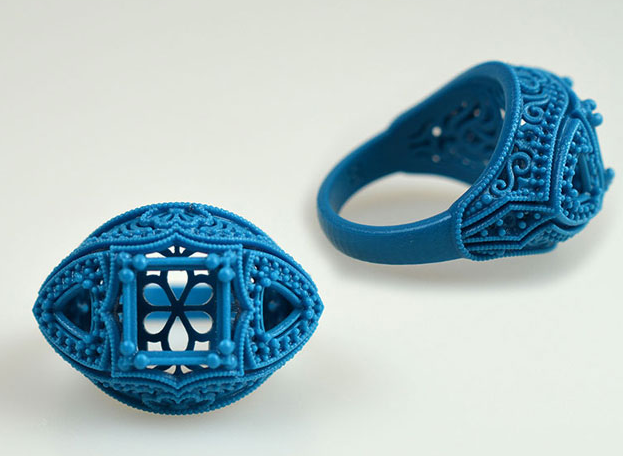
Manual wax-up or milled wax pattern
Investment investing, burnout (8–12+ hours)
Casting metal/alloy
Divesting, finishing
Total lab time: 1–3 days per case, with multiple hands-on steps prone to variability and delays (e.g., burnout cycles, cooling). For multi-unit bridges or implant frameworks, scheduling bottlenecks are common.
3D Printing (Additive Manufacturing)
Digital workflow:
CAD design → direct print (resin patterns or final provisional/metal-compatible parts)
Print time: 1–8 hours depending on printer (DLP/SLA faster than older SLA)
Post-processing: cleaning (5–15 min), curing (10–30 min)
For castable patterns: burnout still needed but faster/lower temp with optimized resins
Total time: Often 2–12 hours for patterns or provisionals; full digital-to-metal can cut 50–70% off traditional timelines. Labs report 6–7 hour savings per denture or restoration batch.
Verdict (2026 Data): 3D printing wins decisively on speed. Studies show digital workflows reduce production time by 50–75% for patterns and provisionals, enabling same-day or next-day delivery—critical for patient satisfaction and practice throughput.
Cost: Materials, Labor & Overhead
Traditional Lost-Wax Casting
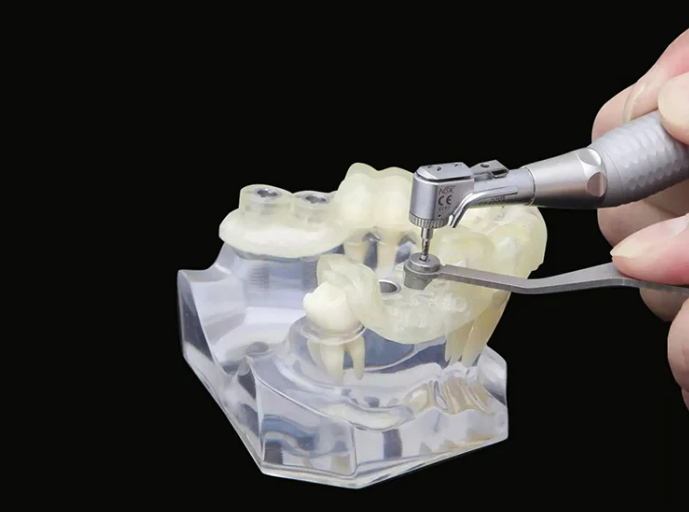
High labor: Manual waxing, investing, burnout supervision
Material waste: Excess wax, investment, sprues
Equipment: Furnaces, casting machines (high energy use)
Per-unit cost: Higher due to skilled technician time and material loss (e.g., $15–30+ per aligner/ provisional equivalent in analog steps)
3D Printing
Lower labor: Automated printing reduces hands-on time
Material efficiency: Additive builds only what's needed (10–30× less material cost vs milling blocks; castable resins cheaper than wax in volume)
Upfront: Printer + post-processing (~$10,000–30,000 initial, but ROI in 6–18 months)
Per-unit: Often 19–40% lower (e.g., $12–15 per aligner vs $15–20 thermoforming/casting analogs; lab savings $172–304 per full denture)
Verdict (2026 Data): 3D printing offers superior cost-efficiency after initial investment. Reviews show reduced variable costs ($150–300 savings per complex case) and material waste, with payback through higher volume and fewer remakes.
Accuracy & Marginal Fit: Clinical Precision
Traditional Lost-Wax Casting
Strengths: Proven for metal copings; good interdental/interimplant accuracy in plaster models
Limitations: Shrinkage during burnout/casting (up to 1–2%), manual variability
Marginal gaps: 50–150 μm typical (clinically acceptable Studies: Often superior in interdental areas on plaster casts
3D Printing
Strengths: Digital precision eliminates manual steps; excellent for complex geometries
Accuracy: Trueness 17–52 μm internal; marginal gaps 20–100 μm (often 30–50% tighter than wax patterns)
For casts: Within Studies (2025): Additive methods match or exceed subtractive/casting in marginal/internal fit for crowns, bridges, and implant frameworks; RMS values comparable or superior in many scenarios
Verdict (2026 Data): 3D printing frequently equals or surpasses traditional casting in marginal and internal fit, especially for complex or implant-supported cases. While plaster casts may edge out in some interdental metrics, printed results stay well within clinical tolerances (<100–200 μm), with fewer variables.
Stick with Traditional Casting if: High-volume metal copings, proven alloy performance needed, or legacy equipment investment is high.
Switch to 3D Printing if: Speed, cost savings, complex designs, implant frameworks, provisionals, or same-day workflows matter most.
Hybrid approaches (print patterns → cast metal) combine the best: digital precision with traditional material strength.
Conclusion: 3D Printing Leads in Modern Dental Labs
In 2026, additive manufacturing has matured into a superior alternative for efficiency and cost, while matching or exceeding traditional casting in clinical accuracy for most restorations. Labs adopting 3D printing report fewer remakes, faster turnarounds, reduced waste, and higher profitability—especially for patterns, provisionals, and implant cases.
Traditional lost-wax casting remains reliable for specific metal applications, but digital additive methods now offer the edge in speed, economics, and precision that modern practices demand.
Evaluate your workflow: Calculate time/cost per case with current vs digital methods. The numbers will likely show why 3D printing isn't just an option—it's becoming the standard for efficient, accurate dental restorations.
Post time: Mar-03-2026