

Introduction to Digital Impression Scanning in Orthodontics
In modern orthodontics, treatment outcomes are strongly dependent on the accuracy of dental impressions. Traditional impression materials, particularly alginate, have been widely used in clinical practice for decades. However, they present inherent limitations related to dimensional stability, storage sensitivity, and time-dependent deformation.
As orthodontics shifts toward digital workflows, digital impression scanning technology using intraoral scanners has become an increasingly important alternative. It enables clinicians to capture stable 3D oral data directly, supporting more predictable orthodontic planning and clear aligner fabrication.
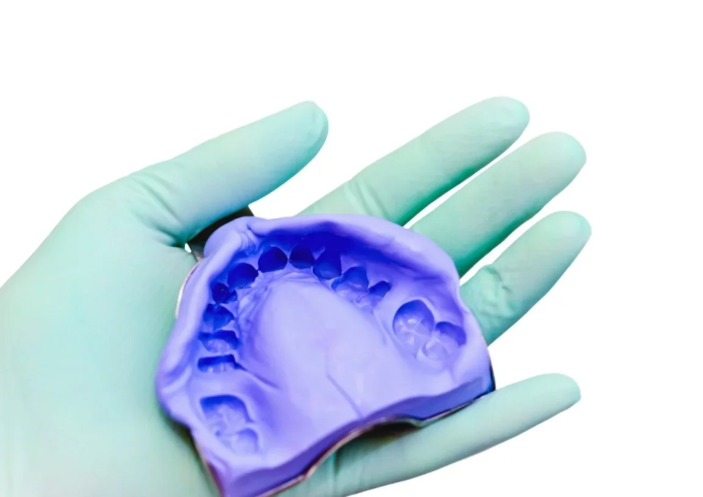
Limitations of Alginate Dental Impressions
Dimensional Instability and Moisture Sensitivity
Alginate impression materials are highly sensitive to environmental conditions. After removal from the oral cavity, they may undergo water loss (syneresis) or water absorption (imbibition). Both processes can result in dimensional changes, which affect the accuracy of dental models.
This instability makes alginate less suitable for workflows that involve delayed processing or transportation between clinic and laboratory.
Time-Dependent Distortion
One of the major limitations of alginate impressions is their time-dependent accuracy degradation. The longer the interval between impression taking and model fabrication, the higher the risk of distortion.
In orthodontic workflows, this delay can occur during:
- Clinical storage before casting
- Transportation to dental laboratories
- Manual handling or inspection processes
Even small deviations in full-arch geometry can influence treatment planning in clear aligner cases.
Loss of Fine Anatomical Details
Alginate impressions may fail to consistently capture fine anatomical structures such as:
- Gingival margins
- Interproximal contact points
- Occlusal surface morphology
These details are critical for accurate digital modeling and predictable orthodontic treatment outcomes.
Advantages of Intraoral Scanning Technology
Digital intraoral scanners eliminate the need for physical impression materials by capturing real-time 3D digital data of the oral cavity.
Real-Time Digital Data Acquisition
Intraoral scanners provide immediate visualization of scanned data, allowing clinicians to verify accuracy during the scanning process. This reduces the likelihood of missing areas or incomplete scans.
Full-Arch Scanning Stability
Modern scanning systems are designed to maintain consistent accuracy across full-arch captures, which is essential for orthodontic diagnosis and clear aligner design.
CAD/CAM System Integration
Digital scan outputs can be exported in standard formats such as STL, PLY, and OBJ, enabling seamless integration with orthodontic CAD/CAM software for treatment planning and aligner fabrication.
Selection Criteria for Orthodontic Intraoral Scanners
When selecting an intraoral scanner for orthodontic applications, several technical factors should be considered:
Scanning Accuracy and Repeatability
High-precision optical systems ensure stable data acquisition across repeated scans, supporting consistent orthodontic planning.
File Format Compatibility
Support for STL, PLY, and OBJ formats is essential for integration with mainstream CAD software used in aligner design.
Chairside Workflow Efficiency
Real-time scanning and immediate feedback improve clinical efficiency and reduce dependence on physical model transportation.
Clinical Impact on Clear Aligner Fabrication
Accurate digital impressions play a critical role in clear aligner treatment workflows. Compared with traditional alginate impressions, intraoral scanning provides more stable and reproducible data, which helps:
- Improve aligner fit and retention
- Reduce mid-course corrections or refinements
- Enhance predictability of tooth movement
- Align digital treatment planning with clinical outcomes
These benefits are particularly important in full-arch orthodontic cases, where small errors can accumulate and affect final treatment accuracy.
Conclusion
Digital impression scanning technology is becoming a core component of modern orthodontic workflows. While alginate impressions remain in use in certain clinical scenarios, their limitations in dimensional stability and accuracy make them less suitable for high-precision applications such as clear aligner fabrication.
In contrast, intraoral scanners provide a stable, repeatable, and fully digital alternative that supports efficient CAD/CAM integration and improved clinical predictability.
As digital dentistry continues to evolve, intraoral scanning is increasingly regarded as a foundational technology in orthodontic treatment planning and aligner manufacturing workflows.
Post time: May-07-2026