

Digital Dentistry Drives Standardization in Material Selection
With the rapid adoption of digital dentistry, CAD/CAM workflows have become the standard production model in modern dental laboratories. From scanning and design to milling and sintering, each step places increasing demands on material performance.
As a result, zirconia has evolved from a single-purpose restorative material into a multi-indication, workflow-oriented material designed to support predictable outcomes across different clinical cases.
New Material Requirements in CAD/CAM Workflows
In a digital workflow environment, zirconia must not only offer good machinability but also maintain structural stability during sintering.
Common challenges faced by dental laboratories include:
- Inconsistent sintering shrinkage
- Shade variation between batches
- Difficulty balancing anterior esthetics and posterior strength
- Deformation control in multi-unit bridge cases
Therefore, “zirconia for CAD/CAM workflow” has become a key selection criterion in material evaluation.
The Value of High Strength Aesthetic Zirconia
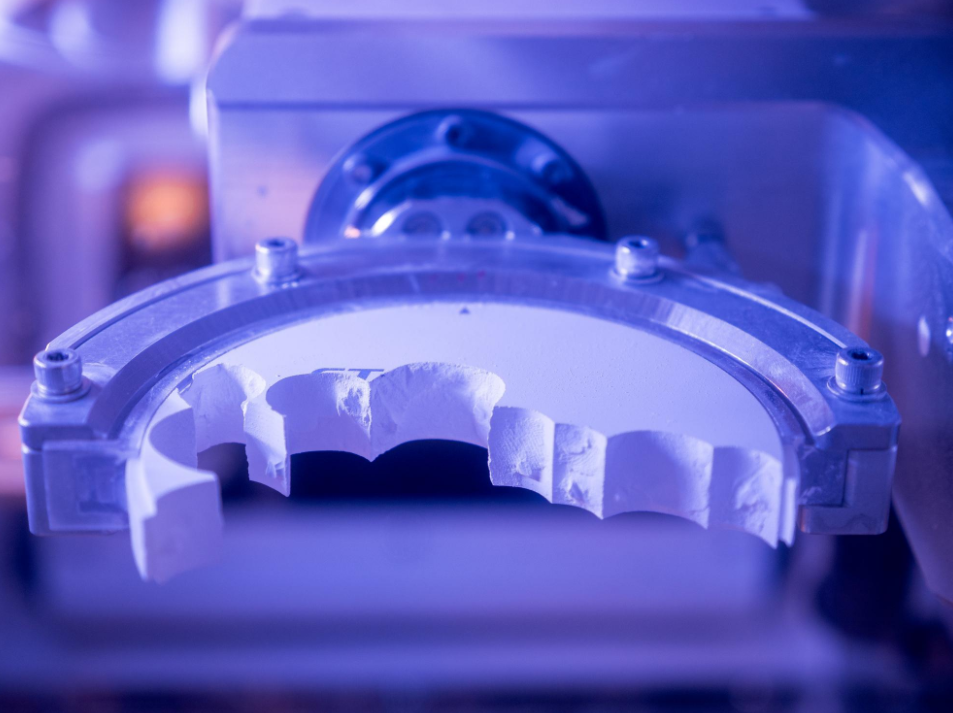
High strength aesthetic zirconia achieves a balance between mechanical performance and esthetic outcomes through optimized crystal structure and translucency control.
Typical industry reference parameters include:
- Flexural strength: 700–1050 MPa
- Translucency range: 43%–57%
- Sintered density: around 6.0 g/cm³ class
This type of material supports a wide range of indications, including:
- Veneers
- Inlays
- Anterior crowns
- Posterior crowns
- Bridges
- Implant restorations
Such multi-indication capability enables laboratories to streamline production within a unified CAD/CAM system.
Key Selection Factors in CAD/CAM Workflow
Dental laboratories typically evaluate zirconia materials based on three key dimensions:
1. Machining Stability
Edge integrity and milling performance directly affect production efficiency and restoration quality.
2. Sintering Consistency
Predictable sintering behavior helps reduce remakes and ensures uniform outcomes in multi-unit restorations.
3. Strength–Esthetics Balance
Anterior restorations require translucency for natural appearance, while posterior restorations demand higher flexural strength for long-term occlusal durability.
Industry Trend: From Material Selection to Workflow Optimization
Dental laboratories in Europe and North America are shifting from single-material purchasing decisions toward full CAD/CAM workflow optimization.
Material selection is no longer based solely on strength, but also on:
- Digital system compatibility
- Batch-to-batch consistency
- Multi-indication capability
- Predictable sintering performance
In the future, zirconia materials that support a complete “design-to-sintering” workflow will become a core component of digital dental manufacturing systems.
Post time: Jun-04-2026