

In 2026, dental laboratories and clinics face a clear choice between two dominant digital fabrication methods: resin liquid 3D printing (vat photopolymerization/SLA-DLP) and traditional subtractive milling (CAD/CAM). Additive manufacturing builds restorations layer-by-layer from liquid photopolymer resins, while subtractive milling carves them from solid blocks of composite, PMMA, or hybrid ceramics. Both deliver clinically acceptable results, yet 2025–2026 studies reveal distinct advantages in accuracy, efficiency, and cost depending on case volume, geometry, and indication. This evidence-based comparison synthesizes the latest in-vitro, meta-analysis, and lab data to guide decision-making for single crowns, bridges, models, aligners, and provisional/permanent restorations.
Liquid resin 3D printing excels in complex geometries, minimal waste, and batch production, while milling offers superior overall trueness and mechanical consistency for high-load materials. The choice now hinges less on “which is better” and more on matching technology to workflow demands.
Accuracy & Fit: Trueness vs Marginal/Internal Adaptation
Recent systematic reviews and in-vitro studies (2025–2026) consistently show nuanced differences:
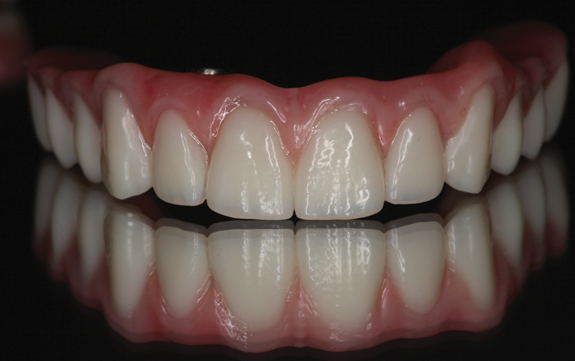
Trueness (overall dimensional accuracy): Subtractive milling generally outperforms resin 3D printing. Milled hybrid ceramic crowns achieve significantly higher trueness than printed counterparts (p<0.05), with global surface deviation often 20–40 μm better.
Marginal & Internal Fit: Resin 3D printing frequently delivers superior adaptation. Printed restorations show better marginal and internal gaps in multiple trials—clinically acceptable values below 100–120 μm are common, with some studies reporting printed crowns outperforming milled in complex geometries and implant-supported cases. One meta-analysis found no significant marginal difference between techniques for fixed restorations, but printed acrylic resins exhibited lower occlusal gaps (39 μm advantage).
Clinical Acceptability: Both methods meet the
Subgroup data confirm: for hybrid ceramics, milling wins trueness while printing wins fitness. Overall, 3D printing provides equal or superior fit accuracy compared to milling for many implant-supported and partial-coverage restorations.
Efficiency & Throughput: Speed, Labor & Workflow
Efficiency favors resin 3D printing in high-volume or complex scenarios:
Production Time: Additive methods shine for batching. One study showed 90 minutes to produce 10 crowns via 3D printing versus 450 minutes for milling and 930 minutes for conventional. Chairside same-day workflows are faster with printing once post-processing is automated.
Labor & Scalability: With automated post-processing stations, resin printing reduces manual steps dramatically. Labs achieve 2–3× throughput without extra staff. Milling requires constant supervision for tool changes and finishing.
Multi-Unit & Complex Cases: Printing handles intricate designs (undercuts, lattices, multi-material gradients) without additional setup time. Milling struggles with geometric complexity and tool access.
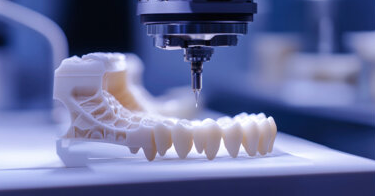
For single-unit high-strength restorations, milling remains competitive in raw speed per piece. For models, aligners, guides, or volume production, liquid resin printing delivers clear efficiency gains.
Cost Comparison: Material, Waste & Per-Unit Economics
Cost-effectiveness tilts strongly toward resin 3D printing in 2026:
Material Waste: Subtractive milling wastes 80–90% of the block as dust; resin printing builds only the required geometry, with waste typically under 20–30% (supports and excess resin recyclable in many systems).
Per-Unit Cost: Printing is significantly cheaper for most indications. Studies report additive chairside crowns at ~EUR 8 versus EUR 29 for subtractive and higher for lab-milled. One analysis found 3D printing 5.5–10.2× less expensive than milled PMMA, composite, or lithium disilicate equivalents. Digital denture protocols using printing save USD 119,000–180,000 over 10 years at moderate volume.
Initial Investment & ROI: 3D printing systems generally require lower upfront capital than high-end 5-axis mills. Break-even occurs faster (73–534 cases for fully digital printing workflows vs higher for mixed/milled). Long-term savings from reduced material, labor, and remakes amplify the advantage in high-volume labs.
Energy & Maintenance: Printing consumes less energy per part at scale; automated closed-loop washing/curing further lowers consumables.
Milling retains an edge for premium high-strength blocks where material cost is offset by durability, but for provisional, temporary, and moderate-load permanent resin restorations, liquid 3D printing offers the lowest total cost of ownership.
Mechanical Performance & Clinical Indications
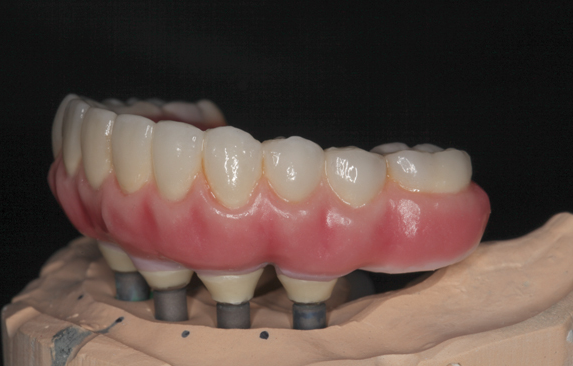
Strength & Durability: Milled materials (especially hybrid ceramics and PMMA) often show higher flexural strength and microhardness. Printed resins have improved but may require optimized post-curing for long-term use.
Esthetics & Wear: Milled restorations demonstrate better color stability and lower staining in aging tests. Printed resins excel in translucency and customization but may need polishing protocols.
2026 Case Selection Guidelines:
Choose Resin Liquid 3D Printing: High-volume production, complex geometries, models, aligners, surgical guides, provisional crowns/bridges, multi-unit cases, or cost-sensitive workflows. Ideal for same-day chairside and minimal waste.
Choose Subtractive Milling: High-load permanent restorations requiring maximum trueness and strength (e.g., posterior zirconia or hybrid ceramics), anterior esthetics demanding predictable external accuracy, or cases where minimal adjustment is critical.
Hybrid Approach: Many labs now combine both—printing for prototypes/models and milling for final high-strength units.
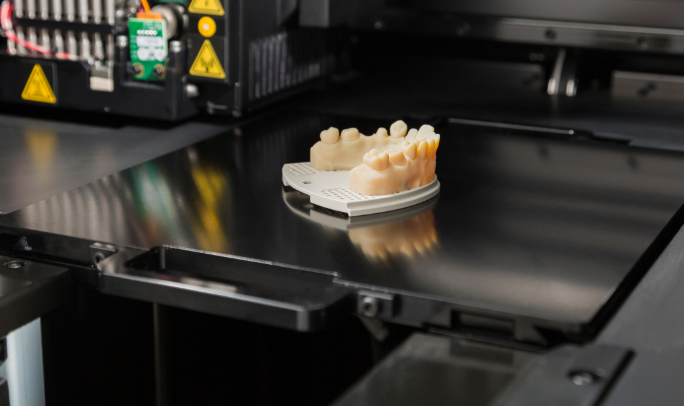
Patient outcomes remain excellent with either when indications are matched: survival rates exceed 95% short-term for both, with printed restorations benefiting from superior fit reducing microleakage risk.
Emerging Trends in 2026
Faster vat polymerization, automated post-processing fleets, AI-optimized support generation, and new high-filler nano-composite resins continue to narrow the mechanical gap with milled materials. Multi-material printing and improved post-curing further enhance printed restoration longevity.
Conclusion
In 2026, neither resin liquid 3D printing nor subtractive milling is universally superior—they excel in complementary areas. Subtractive milling delivers higher trueness and mechanical reliability for select permanent restorations, while vat photopolymerization resin printing dominates in marginal/internal fit, material efficiency, batch throughput, and overall cost (often 5–10× lower per unit with far less waste). Labs and clinics adopting the right technology for the right case achieve 2–3× productivity, reduced remakes, and better ROI without compromising clinical quality.
Post time: Apr-03-2026