

Eastern Europe’s dental sector is booming in 2026. Dental tourism drives demand in Hungary, Poland, and Romania, with clinics and labs handling rising volumes of crowns, veneers, and bridges for international patients. Small and medium-sized practices—often 5–15 chairs or labs producing 100–400 units monthly—face a key investment choice: wet milling, dry milling, or hybrid systems.
The decision affects speed, esthetics, costs, and profitability. With entry-level CAD/CAM milling machines now priced €15,000–€25,000, the right choice delivers payback in 4–7 months for active practices. Wrong choice locks in higher lab fees or lost same-day opportunities. Here’s the data-driven comparison tailored to Eastern European realities.
How Wet and Dry Milling Work – Core Differences
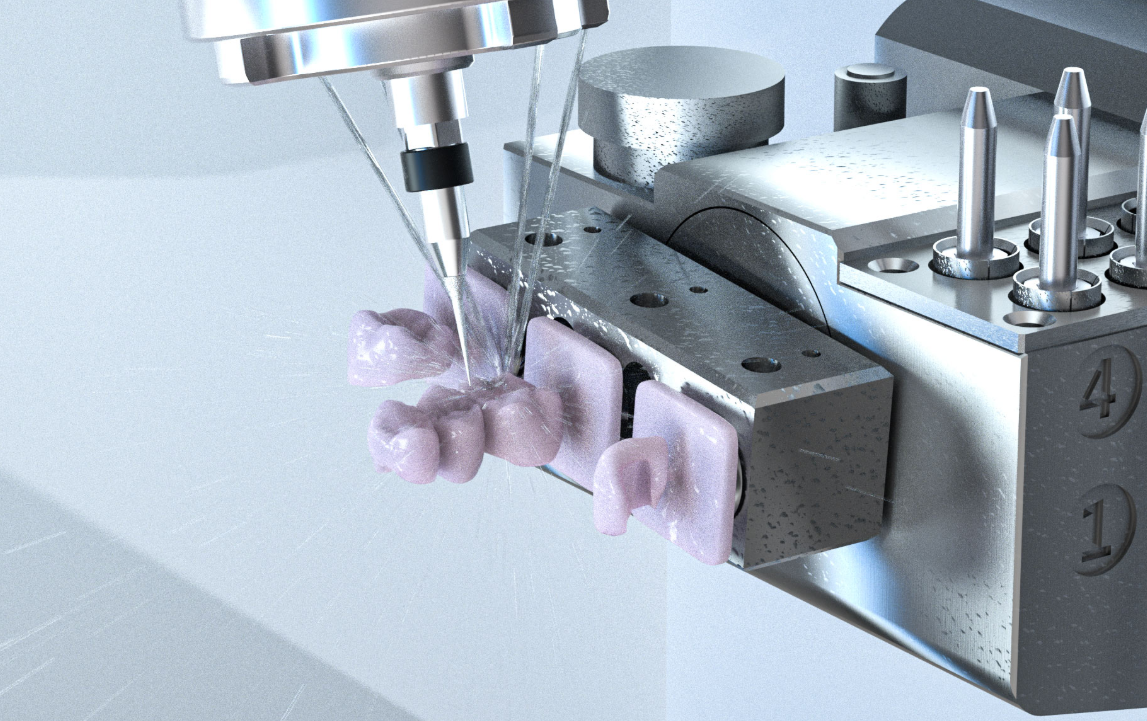
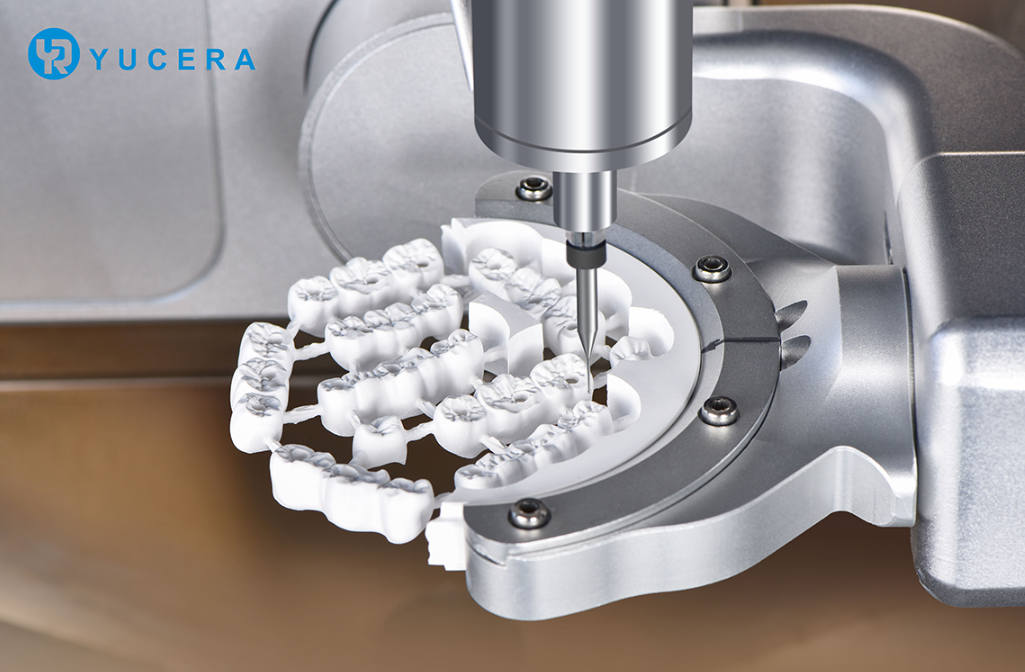
Dry milling uses no coolant. The spindle cuts pre-sintered zirconia, PMMA, or wax at high speeds. It generates dust (managed by vacuum systems) but requires minimal cleanup. Wet milling sprays water-based coolant during cutting. This cools the material and tool, producing smoother surfaces and preventing micro-cracks.
Material Reality in Eastern European Practices
Most small clinics and labs in the region see a 60/40 split: zirconia for strength and cost (popular with budget-conscious patients and full-arch cases) versus glass ceramics for natural translucency in visible zones.
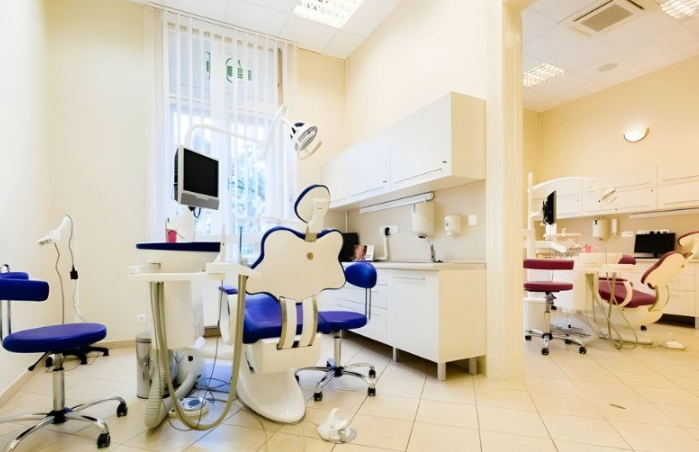
Dry milling handles 70–80% of typical output in many Polish and Romanian labs—zirconia frameworks sinter quickly and deliver durable posteriors at low material cost.
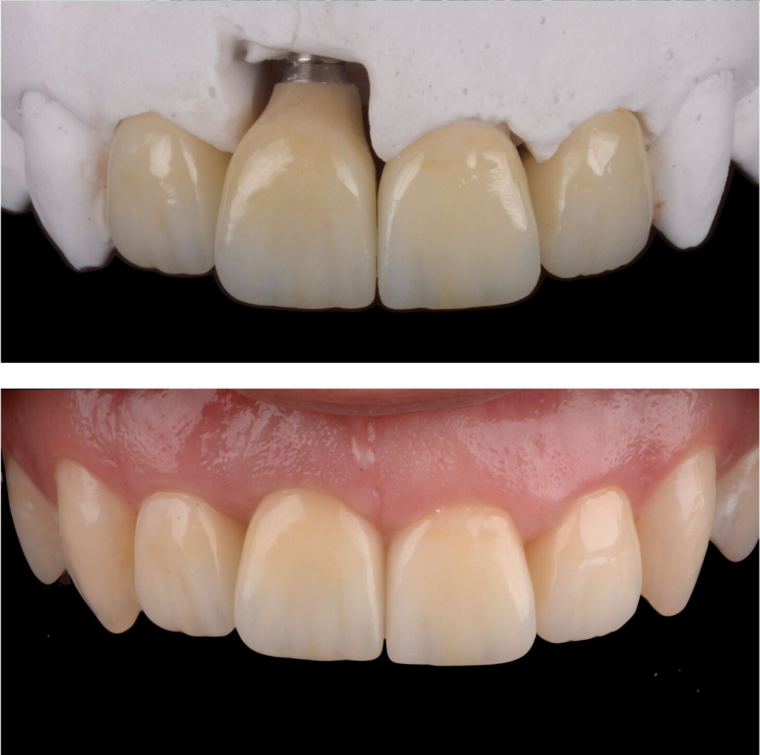
Wet milling is essential for lithium disilicate crowns and veneers. These drive dental tourism revenue because patients demand same-day, lifelike results. Heat from dry milling risks micro-cracks, poor margins, and failures—unacceptable when patients fly in for one-visit care.
Hybrid machines (switchable wet/dry) solve both worlds but add 15–25% to purchase price and require extra cleaning time. For practices under 200 units/month, separate dedicated machines often yield faster ROI than one hybrid unit.
Cost and ROI Breakdown for Small/Medium Operations
Entry-level 4- or 5-axis mills suit Eastern Europe’s compact spaces and budgets.
Purchase price (2026): Dry systems start lower; wet adds coolant systems. Total installed cost (machine + scanner integration + training) ranges €20,000–€45,000.
Operating costs: Dry wins on simplicity—annual bur and filter costs ~€2,000–€3,500. Wet adds €1,500–€2,500 yearly for coolant and maintenance but doubles tool life.
Revenue impact: A clinic milling 10 crowns/week saves €80–€150 per unit versus outsourcing. Same-day glass-ceramic workflows (wet) command premium tourist pricing while filling chairs faster. Labs producing 150+ units/month recover investment in 5–7 months via reduced external lab fees (often 40–60% of restoration price).
Real 2026 numbers: European dental milling market grows steadily, with clinics adopting chairside systems fastest. Practices exceeding 25–30 crowns monthly see margins rise sharply once milling is in-house. Eastern Europe benefits from lower labor and overhead, amplifying ROI compared to Western markets.
Why Eastern European Small Practices Choose Differently
Geography and patient mix matter. Proximity to airports in Budapest, Warsaw, and Bucharest fuels one- or two-day tourism packages. Patients from Western Europe and beyond expect fast, esthetic results—favoring wet milling for glass ceramics that rival lab quality without delays.
Small clinics (chairside focus) lean wet or hybrid for same-day service and higher patient throughput. Medium labs serving multiple clinics often start with dry for zirconia volume, adding wet capacity as glass-ceramic demand grows 20–30% annually with cosmetic tourism.
Power reliability and space constraints in converted buildings favor compact dry units initially. Yet EU standards and rising patient expectations push many toward wet precision to minimize remakes (costly at €150–€300 per case).
Decision Framework for 2026 Investment
Volume & Mix Check — >70% zirconia and high daily output? Start dry. Heavy glass-ceramic or veneer focus? Prioritize wet.
Budget & Space — Under €25,000 and tight footprint? Dry or basic wet. Leasing options common in the region reduce upfront burden.
Growth Plan — Planning dental tourism expansion? Wet milling supports same-day full smile makeovers that attract repeat international patients.
Maintenance Capacity — Limited technician time? Dry wins. Staff comfortable with fluids? Wet adds little burden long-term.
Hybrid Option — Best for mixed workflows once monthly volume exceeds 100 units.
Many successful small practices in Hungary and Poland run separate dry and wet mills—fast zirconia production plus premium glass-ceramic capability—without the cleaning downtime of frequent switching.
Long-Term Outlook and Risks
By 2030, CAD/CAM adoption in Eastern European dental labs is projected to mirror broader European growth trends. Material innovation favors both technologies: stronger glass ceramics need wet precision, while improved zirconia benefits from dry efficiency.
Risks for small operations include underestimating maintenance (wet) or dust extraction (dry) and choosing closed systems that limit material suppliers. Open-architecture machines dominate in cost-sensitive markets like Romania and Poland.
Final Recommendation
For most Eastern European small clinics and labs in 2026, the smartest path is not one machine but strategic pairing. Begin with a reliable dry mill for zirconia volume and profitability, then add wet capability when glass-ceramic cases reach 30% of output. This model maximizes ROI, supports tourism-driven growth, and delivers the esthetic quality patients demand.
The data is clear: in-house milling—wet or dry—beats outsourcing for practices ready to scale. Evaluate your case mix, calculate monthly units, and invest where your patients and margins intersect. The right 2026 decision turns technology into sustainable competitive advantage across Hungary, Poland, Romania, and beyond.
Post time: Mar-25-2026