

What Is Tooth Opalescence? How Natural Light Effects Improve Zirconia Restoration Aesthetics
When evaluating a dental restoration, most people first look at the color. However, natural teeth are much more complex than a simple shade match.
A natural tooth changes its appearance depending on:
- Lighting conditions
- Viewing angle
- Tooth structure
- Optical properties of enamel and dentin
One of the key characteristics responsible for this natural appearance is tooth opalescence.
Opalescence gives natural teeth their subtle color changes, especially around the incisal edge, creating depth, transparency, and a lifelike appearance.
For modern aesthetic dentistry, understanding opalescence has become increasingly important because patients and clinicians expect restorations to look natural in every environment.
What Is Tooth Opalescence?
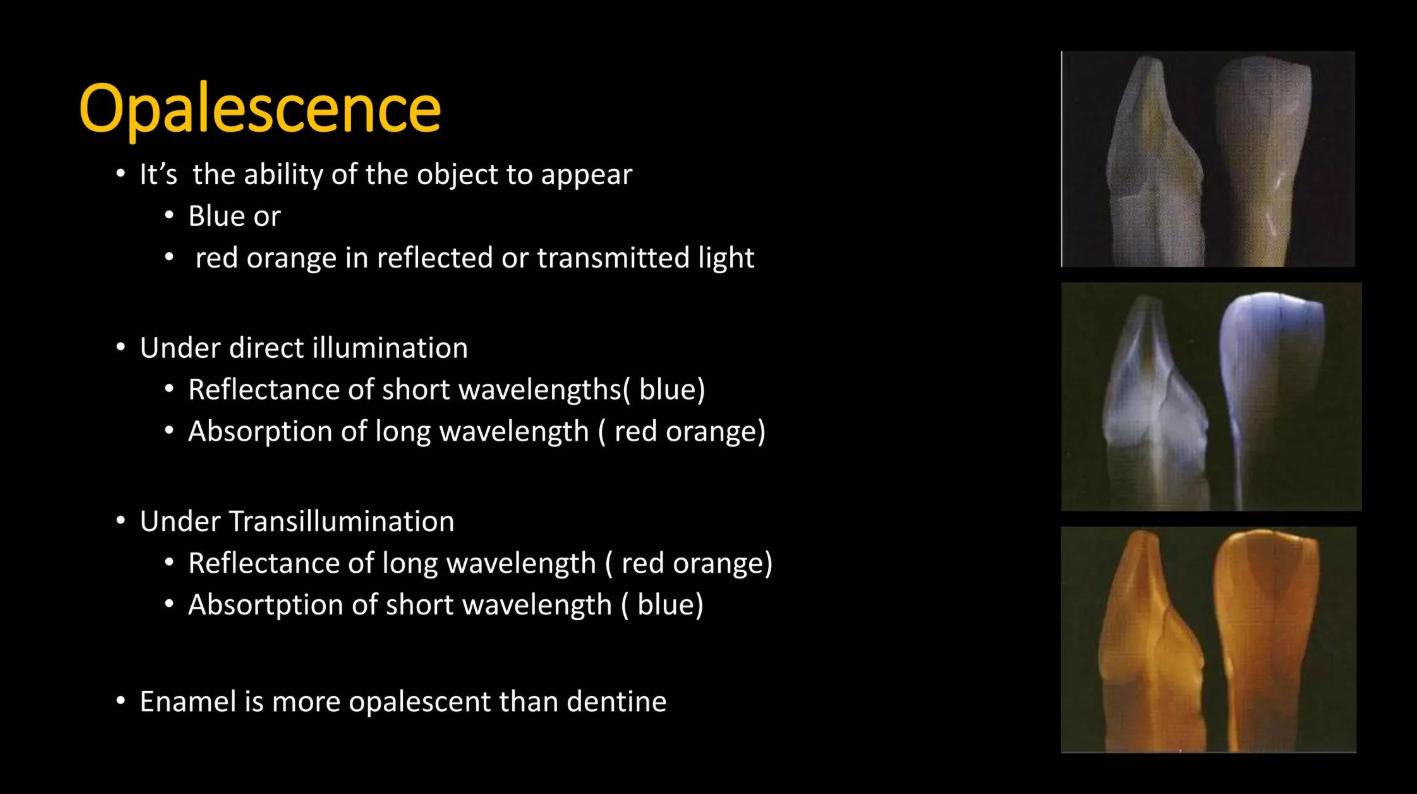
Tooth opalescence is a natural optical phenomenon where tooth structures interact with light and create different color effects depending on the wavelength of light and the observation angle.
In simple terms:
Natural teeth do not reflect light in only one color. They can show subtle blue, gray, and warm tones as light passes through and reflects from the tooth structure.
This effect is especially visible at the incisal edge of anterior teeth, where enamel is thinner and more translucent.
Under natural lighting, opalescence helps teeth appear:
- More transparent
- More dynamic
- More similar to natural enamel
Without this effect, teeth may appear flat, artificial, or overly white.
Why Do Natural Teeth Have Opalescence?
The opalescent effect mainly comes from the unique structure of dental enamel.
Unlike artificial materials with uniform composition, enamel is a highly organized biological structure containing millions of microscopic hydroxyapatite crystals.
These crystal structures influence how light behaves inside the tooth.
When light enters enamel:
- Shorter wavelengths, such as blue light, are scattered more strongly.
- Longer wavelengths, such as yellow and orange light, pass through more easily.
This difference in light interaction creates the characteristic optical effect known as opalescence.
The Role of Enamel in Tooth Opalescence
Enamel plays the most important role in creating natural opalescence.
Its characteristics include:
- High mineral content
- Semi-translucent structure
- Organized crystal arrangement
- Ability to transmit and scatter light
The thickness of enamel also affects optical performance.
Incisal Area
The cutting edge of anterior teeth usually has:
- Thinner enamel
- Higher translucency
- Less influence from dentin
This creates:
- Blue-gray transparency
- Natural depth
- Soft light reflection
Cervical Area
The cervical region contains more influence from dentin.
It appears:
- Warmer
- More saturated
- Slightly more yellow
This natural transition creates the realistic appearance of human teeth.
Why Opalescence Matters in Dental Aesthetics
Modern aesthetic dentistry is no longer only about creating a white smile.
A truly natural restoration requires multiple optical characteristics:
- Shade
- Translucency
- Fluorescence
- Opalescence
- Surface texture
Opalescence helps restorations achieve:
Natural Light Reflection
A restoration with proper opalescence interacts with light more like natural enamel.
Better Depth Perception
Instead of appearing like a solid white object, the restoration shows internal layers and optical depth.
Improved Integration With Natural Teeth
When the optical behavior matches surrounding teeth, the restoration becomes less noticeable.
Why Do Some Dental Restorations Look Artificial?
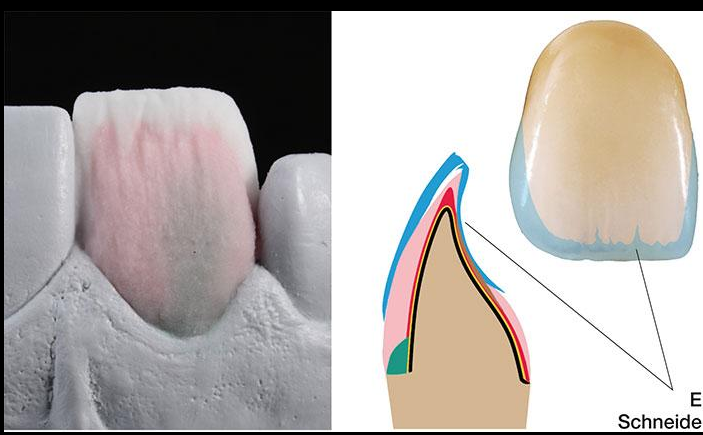
A restoration may have the correct shade but still look unnatural.
This often happens because the material does not reproduce natural optical properties.
Common reasons include:
Excessive Opacity
If light cannot enter the restoration properly:
- The crown may appear flat.
- The tooth may look too bright.
- The restoration may lack depth.
Lack of Optical Variation
Natural teeth change appearance under different lighting.
A restoration with limited light interaction may appear identical from every angle, which creates an artificial appearance.
Missing Incisal Effects
The incisal edge is one of the most important areas for aesthetic perception.
Without proper translucency and opalescence, anterior restorations may lose the natural blue-gray edge effect.
The Relationship Between Opalescence and Zirconia Restorations
Zirconia has become one of the most widely used materials in digital dentistry because of its excellent:
- Strength
- Biocompatibility
- Durability
- Manufacturing precision
However, early zirconia materials mainly focused on mechanical performance.
For aesthetic restorations, especially anterior cases, strength alone is not enough.
Modern zirconia development focuses on improving optical characteristics, including:
- Translucency
- Shade gradients
- Fluorescence
- Opalescence-like effects
How Multilayer Zirconia Mimics Natural Teeth
Natural teeth are not one uniform color.
From the cervical area to the incisal edge, there are gradual changes in:
- Color intensity
- Transparency
- Light transmission
Modern multilayer zirconia blocks are designed to reproduce these natural transitions.
They achieve this through:
1. Layered Shade Gradient
Different areas of the zirconia block contain different color levels, helping restorations achieve a natural appearance without complicated staining procedures.
2. Controlled Translucency
Different regions of the restoration can allow different amounts of light transmission, similar to natural enamel and dentin.
3. Improved Optical Behavior
Advanced zirconia materials are optimized to interact with light more naturally, helping restorations appear more lifelike.
Opalescence vs Translucency vs Fluorescence
These three optical properties are often discussed together but represent different behaviors.
| Property | Function |
|---|---|
| Translucency | Controls how much light passes through the material |
| Opalescence | Creates angle-dependent color effects, especially blue and warm tones |
| Fluorescence | Produces visible light after absorbing UV energy |
A simple explanation:
Translucency makes a restoration look deep.
Opalescence makes a restoration look natural and dynamic.
Fluorescence gives a restoration more vitality under special lighting.
Together, these characteristics help reproduce the complex appearance of natural teeth.
Why Opalescence Is Important for Anterior Zirconia Restorations
Anterior teeth are highly visible, making aesthetic performance especially important.
For:
- Veneers
- Anterior crowns
- Smile design cases
- Full-mouth aesthetic rehabilitation
small optical differences can significantly affect the final result.
A successful anterior restoration should not only match the patient’s tooth color but also reproduce:
- Natural translucency
- Incisal effects
- Light reflection
- Optical depth
This is why modern zirconia materials continue to evolve beyond strength and focus more on natural aesthetics.
How Dental Laboratories Can Improve Aesthetic Outcomes
Dental laboratories can achieve more natural restorations by considering:
Material Selection
Different zirconia materials are designed for different clinical requirements.
High-translucency zirconia may be suitable for aesthetic anterior restorations, while higher-strength zirconia may be preferred for posterior or full-arch applications.
Digital Design
CAD software allows technicians to control:
- Tooth morphology
- Thickness
- Incisal design
- Layer structure
Understanding Natural Tooth Optics
Knowing how enamel and dentin interact with light helps technicians select appropriate materials and finishing methods.
Conclusion
Natural teeth are beautiful not only because of their color but because of their complex interaction with light.
Tooth opalescence creates the subtle blue, gray, and warm color effects that give teeth depth and vitality. It is one of the key optical characteristics that distinguish natural teeth from artificial-looking restorations.
As digital dentistry continues to develop, modern zirconia materials are moving beyond simply providing strength and durability. The future of dental ceramics is focused on reproducing the complete optical behavior of natural teeth—including translucency, fluorescence, and opalescence.
A truly aesthetic restoration is not just a replacement tooth.
It is a restoration that behaves like a natural tooth under real-world light.
Post time: Jul-16-2026