

Digital dentistry is creating new possibilities for dental restorative materials. Among these developments, ceramic-filled resins have attracted increasing attention because they combine inorganic ceramic fillers with an organic polymer matrix and can be processed using digital manufacturing technologies.
Unlike traditional dental ceramics, which generally require milling and, depending on the material, high-temperature sintering or crystallization, photopolymerizable ceramic-filled resins can be shaped through layer-by-layer 3D printing.
But what makes this material suitable for dental restorations? What are its main components, and how do they contribute to its properties?
To understand its potential, it is important to look at its material composition, structural characteristics, manufacturing process, and current clinical applications.
1. What Are the Main Components of Ceramic-Filled Resins?
Ceramic-filled resins are composite materials consisting primarily of inorganic ceramic fillers and an organic resin matrix. Depending on the formulation, they also contain photoinitiators and functional additives.
Each component contributes differently to the material’s processing behavior and final properties.
1.1 Inorganic Ceramic Fillers
Inorganic fillers are an essential component of ceramic-filled resins. They distinguish these materials from conventional unfilled photopolymer resins.
Common filler materials may include:
- Silica (SiO₂)
- Zirconia (ZrO₂)
- Alumina (Al₂O₃)
- Other inorganic oxides
The specific filler composition varies between formulations.
Main functions:
- Increase material stiffness and hardness.
- Improve surface and wear-related properties.
- Modify the elastic modulus.
- Influence translucency and light scattering.
- Reduce the proportion of the organic matrix in the overall composite.
The type, particle size, shape, and distribution of ceramic fillers all influence the final material properties.
1.2 Organic Resin Matrix
The resin matrix forms the continuous phase of ceramic-filled resins. It surrounds and connects the inorganic filler particles, creating a unified composite structure.
Common resin systems include acrylate- and methacrylate-based monomers.
Main functions:
- Provide the flow characteristics required for printing.
- Form a crosslinked polymer network during photopolymerization.
- Bind ceramic filler particles together.
- Influence toughness, polymerization shrinkage, and mechanical behavior.
- Provide the structural foundation of the composite material.
The resin matrix is particularly important because it allows the liquid material to transform into a solid restoration through light-induced polymerization.
1.3 Photoinitiators
Photoinitiators are essential components in light-curable ceramic-filled resins designed for vat photopolymerization.
When exposed to light at a suitable wavelength, photoinitiators generate reactive species that initiate the polymerization of resin monomers.
This process transforms the liquid resin into a solid polymer structure.
Main functions:
- Initiate the photopolymerization reaction.
- Control curing speed and depth.
- Influence interlayer bonding.
- Affect printing accuracy and final conversion.
The selection and concentration of photoinitiators must be compatible with the printer’s light source and the optical characteristics of the resin.
1.4 Functional Additives
In addition to the main components, ceramic-filled resins may contain functional additives to improve their formulation and processing characteristics.
| Additive | Main Function |
|---|---|
| Dispersants | Improve filler distribution within the resin matrix |
| Coupling agents | Enhance bonding between inorganic fillers and the organic matrix |
| Stabilizers | Improve formulation and storage stability |
| Colorants | Adjust the final material color |
| Rheology modifiers | Control viscosity and flow behavior |
Among these additives, coupling agents are particularly important.
Ceramic fillers and organic resins have different chemical characteristics. Without sufficient interfacial bonding, stress transfer between the two phases may become less effective, potentially affecting the mechanical performance of the composite.
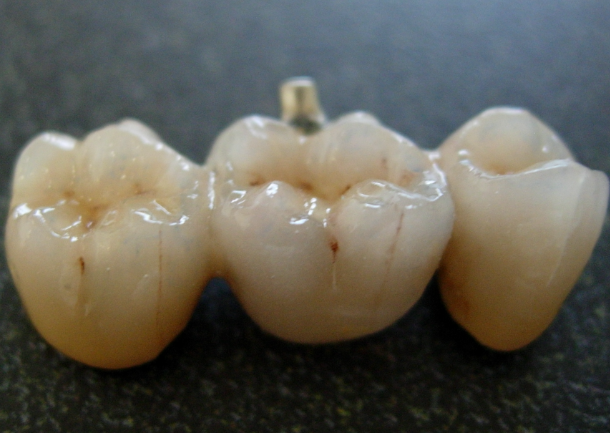
2. Why Can Ceramic-Filled Resins Be Used for Dental Restorations?
Combining ceramic fillers and a polymer matrix creates a material with properties that can be adjusted for different restorative applications.
Its potential as a dental restorative material comes from several important characteristics.
2.1 Mechanical Properties
Dental restorations must withstand repeated chewing forces and maintain their structural integrity during use.
Ceramic fillers contribute to the stiffness and hardness of the composite, while the crosslinked polymer matrix provides structural continuity.
Together, these components influence several mechanical properties:
- Flexural strength
- Elastic modulus
- Surface hardness
- Wear resistance
- Fracture behavior
However, increasing ceramic filler content does not automatically improve every mechanical property.
The resin chemistry, filler distribution, particle characteristics, and interfacial bonding also play important roles.
Therefore, the mechanical performance of ceramic-filled resins depends on the overall formulation rather than a single compositional factor.
2.2 Esthetic Properties
Esthetics are another important consideration in restorative dentistry.
Dental restorations should reproduce the appearance of natural teeth as closely as possible, particularly in visible areas.
Ceramic-filled resins can be formulated to adjust several optical properties:
- Translucency
- Color
- Opalescence
- Surface gloss
- Color stability
The inorganic fillers influence how light travels through the material by affecting light scattering and transmission.
Meanwhile, the resin matrix and colorants also contribute to its overall optical appearance.
By adjusting these components, manufacturers can develop formulations with different esthetic characteristics for specific restorative applications.
Nevertheless, optical performance should be evaluated through actual testing rather than inferred from filler content alone.
2.3 Digital Manufacturing Flexibility
One of the most important reasons ceramic-filled resins have attracted attention is their compatibility with digital manufacturing.
Unlike zirconia, which is commonly processed through CAD/CAM milling followed by sintering, photopolymerizable ceramic-filled resins can be manufactured through layer-by-layer 3D printing.
The general manufacturing process includes:
- Digital Design: A dental restoration is designed using CAD software based on the patient’s digital model.
- Layer-by-Layer Printing: The printer selectively exposes the liquid resin according to the digital design.
- Photopolymerization: Photoinitiators generate reactive species under light exposure, initiating the polymerization reaction.
- Washing: Uncured resin is removed from the printed restoration.
- Post-Curing: Additional light exposure helps complete polymerization.
- Finishing: The restoration is finished and polished according to the material manufacturer’s instructions.
This manufacturing approach allows complex restoration geometries to be produced directly from digital designs.
It also reduces the need for subtractive material removal and can support more flexible production workflows.
However, printability depends on several formulation characteristics, including viscosity, filler concentration, particle distribution, and light transmission.
2.4 Toughness and Fracture Behavior
Traditional dental ceramics are generally characterized by high hardness and stiffness, but their brittle nature makes fracture behavior an important consideration.
Ceramic-filled resins have a different material structure.
Their polymer matrix can undergo deformation and dissipate energy during loading, potentially changing how cracks initiate and propagate.
This may give certain ceramic-filled resin formulations less brittle behavior compared with conventional ceramics.
However, this does not mean that ceramic-filled resins are immune to fracture.
Their toughness and resistance to damage depend on the resin formulation, filler characteristics, polymerization conditions, and restoration design.
2.5 Suitability for Different Dental Applications
Ultimately, a material’s suitability for dental restorations depends on whether it meets the functional and biological requirements of its intended application.
Important considerations include:
- Mechanical strength under functional loading.
- Resistance to wear and surface deterioration.
- Color stability over time.
- Biocompatibility.
- Bonding performance with dental tissues and luting materials.
- Dimensional accuracy and marginal fit.
Different ceramic-filled resin formulations may be developed for different applications.
Depending on their material properties and regulatory indications, they may be considered for provisional restorations or selected indirect restorations, including crowns, inlays, onlays, and veneers.
Not every printable resin is suitable for every restoration type. Its approved indications and supporting clinical evidence must always be considered.
3. How Are Ceramic-Filled Resins Different from Zirconia?
Although both materials can be used in dental restorations, their material structures and manufacturing principles are fundamentally different.
3.1 Differences in Material Structure
Zirconia
Zirconia is a polycrystalline ceramic primarily composed of zirconium dioxide.
Its structure consists of interconnected crystalline grains, and its mechanical properties are influenced by factors such as yttria content, grain size, phase composition, and density.
Ceramic-Filled Resin
Ceramic-filled resin is an organic-inorganic composite.
Inorganic ceramic particles are distributed throughout a continuous polymer matrix. The interaction between these two phases determines many of its mechanical and optical characteristics.
3.2 Differences in Manufacturing Processes
Zirconia restorations are commonly produced through CAD/CAM milling, followed by high-temperature sintering to achieve their final density and dimensions.
Ceramic-filled resin restorations designed for photopolymerization are produced through 3D printing, followed by washing, post-curing, and finishing.
These different manufacturing principles result in different processing requirements and material characteristics.
3.3 Comparison of Key Characteristics
| Comparison | Zirconia | Ceramic-Filled Resin |
|---|---|---|
| Material structure | Polycrystalline ceramic | Organic-inorganic composite |
| Main components | Zirconium dioxide | Resin matrix and ceramic fillers |
| Manufacturing | CAD/CAM milling and sintering | Photopolymerization-based 3D printing |
| Forming principle | High-temperature densification | Light-induced polymerization |
| Mechanical behavior | High stiffness and hardness, with ceramic fracture characteristics | Polymer-influenced deformation and fracture behavior |
| Post-processing | Sintering, staining, glazing, or other finishing as required | Washing, post-curing, polishing, and other finishing as required |
Neither material should be considered universally superior.
Their suitability depends on the restoration type, functional requirements, material specifications, and clinical conditions.
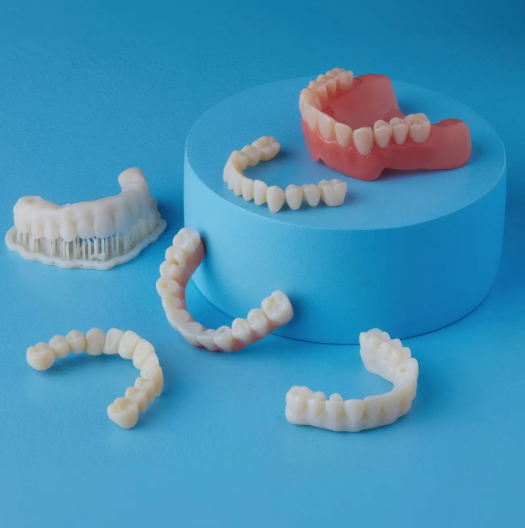
4. Is a Higher Ceramic Filler Content Always Better?
Not necessarily.
Ceramic filler content is an important factor in determining the performance of ceramic-filled resins, but it should not be considered the only indicator of material quality.
A 2023 study published in the Journal of Esthetic and Restorative Dentistry investigated the composition and mechanical properties of several materials used for 3D-printed dental crowns and hybrid restorations.
The study reported that the tested 3D-printable resin materials had filler contents ranging from approximately 3% to 50%.
It also identified relationships between filler content, elastic modulus, and hardness. However, filler content alone did not show a statistically significant linear relationship with flexural strength.
The findings suggest that resin composition and other material characteristics also influence mechanical performance.
Other important factors include:
1. Filler Type and Chemical Composition
Different inorganic fillers have different physical and optical characteristics, which can influence the overall performance of the composite.
2. Particle Size and Shape
Particle morphology affects filler distribution, surface characteristics, and the interaction between particles and the resin matrix.
3. Filler Distribution
Uniform dispersion is important for obtaining consistent material properties. Agglomeration or particle separation may create local variations in the composite structure.
4. Interfacial Bonding
The bonding between ceramic fillers and the resin matrix influences stress transfer and the structural integrity of the composite.
5. Resin Chemistry and Polymerization
The type of monomers, crosslinking density, and degree of conversion can influence strength, stiffness, toughness, and long-term stability.
Therefore, a well-designed ceramic-filled resin requires a balance between filler characteristics, resin chemistry, and processing requirements.
5. What Is the Future of Ceramic-Filled Resins in Restorative Dentistry?
Ceramic-filled resins represent an important direction in the development of digitally manufactured dental materials.
Their combination of inorganic fillers and polymer matrices offers opportunities to adjust mechanical properties, optical characteristics, and printing behavior through material formulation.
However, their development also faces several challenges.
Improving Mechanical Performance
Future material development needs to focus on improving flexural strength, fatigue resistance, wear behavior, and fracture resistance.
Optimizing Filler Distribution
Better control over filler particle size, dispersion, and interfacial bonding may help improve consistency and overall material performance.
Enhancing Esthetic Stability
Color stability, translucency, surface gloss, and resistance to staining remain important considerations for long-term restorative applications.
Establishing Long-Term Clinical Evidence
Laboratory testing can demonstrate material feasibility, but long-term clinical studies are necessary to establish restoration survival, wear behavior, and performance under actual oral conditions.
A 2025 review published in the Journal of Esthetic and Restorative Dentistry highlighted both the customization potential and current mechanical limitations of the first generation of 3D-printed ceramic-reinforced composites. It also emphasized the need for further clinical validation, particularly for definitive restorations.
As digital manufacturing technologies and material formulations continue to develop, ceramic-filled resins may become increasingly relevant to restorative dentistry.
Their future will depend not simply on making them easier to print, but on achieving a reliable balance between mechanical performance, esthetics, biocompatibility, and long-term clinical durability.
Conclusion
Ceramic-filled resins combine inorganic ceramic fillers with an organic polymer matrix to create composite materials suitable for digital manufacturing.
Their potential in restorative dentistry comes from the complementary roles of these components: ceramic fillers contribute to stiffness, hardness, and optical characteristics, while the polymer matrix provides structural continuity and enables photopolymerization-based processing.
Although they offer new possibilities for digital dental manufacturing, their mechanical performance and long-term clinical durability still require further development and validation.
Rather than viewing ceramic-filled resins as a direct replacement for traditional dental ceramics, it is more appropriate to understand them as an emerging material category with its own properties, advantages, limitations, and potential clinical applications.
Post time: Nov-20-2026